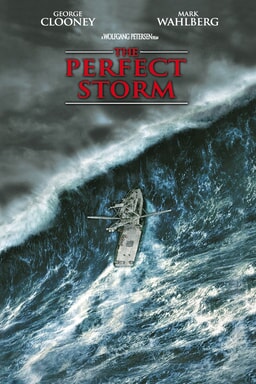
In October of 1991 a storm stronger than any in recorded history hit the coast off of Gloucester, Massachusetts. This "Perfect Storm" — so called because it was three storms combined into one — created an almost apocalyptic situation in the Atlantic ocean, where boats encountered waves of 100 feet (30 meters) — the equivalent of a ten-story building. These storms are some of the strongest and most terrifying manifestations of nature's strength.

In this section you can see satellite images of the storm as it formed in the last week of October, read a weatherman's account of the event, see amateur video shot in Gloucester as the storm picked up, learn the facts and science of hurricanes and tropical storms, and see a graphic representation of what exactly a 100-foot wave means.


Dave Epstein, a meteorologist, describes the storm through his experiences calling the weather at the end of October, 1991, as the Perfect Storm was building (click the pictures on the right to see satellite images shot during the storm):

David Epstein David Epstein
"Back in October 30th through November 1st, 1991, I was working at a TV station down in Hartford, watching the storm unfold…we had a lot of events going on at the time, weather-wise. Meteorologically, we had an old hurricane that was beginning to die out in the Atlantic, which was Hurricane Grace. At the same time, there was energy coming across from the Great Lakes, and you also had an old frontal system that was around the New England area. Basically what happened is that the energy from these three storms combined over time out in the Atlantic. As time went on, the energy caused the old hurricane to really regenerate itself, and it basically became another hurricane.

"What made this storm so extraordinary was the fact that, for one thing, it had been an old hurricane which did regenerate itself, and you also had three things combining meteorologically to form what we now call the 'perfect storm' or the 'no-name storm,' because it wasn't given a name of a hurricane. Sometimes when storms interact, they can flip around each other, one can cause another one to die. The interaction of these two was most interesting, because it actually combined into one and did form one perfect storm.

"Both local meteorologists and the National Weather Service and the Hurricane Center were faced with a dilemma at that point, whether you rename the storm system, or whether you give it back the old name. It was late in the hurricane season, we were approaching November 1st, and it was also in an area where it really wasn't a danger to land per se — it was going in the shipping lanes. Of course we now know that that danger presented itself, unfortunately, to ships out at sea.

"Most meteorologists still refer to it as the 'no-name storm,' because it wasn't given a name…and it probably should have been."


October 26, 1991


October 27, 1991


October 28, 1991


October 29, 1991


October 30, 1991


October 31, 1991


November 1, 1991


Satellite images courtesy of NOAA/National Climatic Data Center | © 2000 Warner Bros.